Fall Back Into Fitness This Season with Simple Healthy Habits
The shift from summer to fall can sneak up fast. One minute the calendar is full of vacations, cookouts, and long sunny evenings. The next, the days feel shorter, the holidays are around the corner, and routines start to slip.
That is exactly why fall is such a good time to reset.
You do not need to overhaul your life, start an intense workout plan, or wait until January to “get back on track.” Fall is a natural season for rhythm. School schedules return, the weather cools down, and routines start to feel possible again. It is the perfect time to fall back into fitness with simple habits that actually fit into real life.
This post is for general wellness and fitness inspiration only. Listen to your body, adjust as needed, and check with a qualified professional if you have health concerns or are starting a new exercise routine.

Start by putting movement on your calendar
If a workout is only floating around in your mind, it is easy for it to disappear when the day gets busy. A calendar reminder gives movement a place in your life before everything else fills the space.
This does not mean every workout needs to be long. Some days, the win might be a full strength session. Other days, it might be a 5-minute walk, a quick stretch, or a few minutes of movement between tasks.
The point is to make movement visible.
Try blocking out time the same way you would for an appointment. If mornings work best, set a reminder before the day gets started. If evenings feel better, schedule movement before dinner or before you sit down to relax. If your schedule changes often, add a few “movement windows” throughout the week so you have options.
A few simple calendar ideas:
A 10-minute walk after breakfast
A 20-minute strength workout three days a week
A stretch break in the afternoon
A longer walk on Saturday or Sunday
A short mobility routine before bed
Setting an alarm can help too. It might be a reminder to walk, stretch, refill your water, or simply stand up and move around. Movement does not have to be complicated for it to count.
Every minute adds up. Those small choices are often what keep a routine alive during busy seasons.
Build a weekly routine you can repeat
Routines work because they lower the number of decisions you have to make. When you already know that Monday is a walk day, Wednesday is a strength day, and Saturday is a longer workout, you do not have to start from scratch every week.
A routine also helps you track progress. You can see what you did, notice what felt good, and adjust when needed.
If you are getting back into fitness after a break, start with a plan that feels realistic. Two or three days a week is enough to build momentum. You can always add more later.
A simple weekly routine might look like this:
Day | Movement idea |
Monday | 20-minute walk |
Tuesday | Rest or gentle stretching |
Wednesday | Full-body strength workout |
Thursday | Short walk or mobility |
Friday | Rest |
Saturday | Longer walk, workout class, or home workout |
Sunday | Light stretching and planning for the week |
This is only an example. Your routine can look different based on your schedule, energy, and goals.
The best routine is one you can repeat. If you dread it, avoid it, or feel like it takes over your life, it probably needs to be simplified. Fitness should support your life, not make it harder to live.
If accountability helps, ask for it. A coach, workout buddy, partner, or family member can make it easier to show up. Sometimes knowing someone is checking in is enough to keep you from skipping the habit you wanted to build.

Look for movement throughout the day
Physical activity does not only happen during a workout. Some of the most useful movement comes from everyday life.
Raking leaves counts. Carrying groceries counts. Doing dishes, folding laundry, vacuuming, walking the dog, taking the stairs, and cleaning out the garage all count. If it gets your body moving, it supports your overall activity.
This mindset matters because it removes the pressure to make every movement session perfect. You can still care about structured workouts while also giving yourself credit for the movement that already exists in your day.
Fall is especially good for this. There are leaves to rake, decorations to put up, closets to switch over, and outdoor spaces to tidy before colder weather arrives. These tasks may not look like a gym workout, but they still require strength, balance, bending, lifting, carrying, and endurance.
Here are a few ways to add more movement without making it a big event:
Walk while you talk on the phone
Park a little farther away when it is safe
Take the stairs when you can
Do a few squats while waiting for food to heat up
Stretch while watching TV
Walk around the block after dinner
Put on music and clean for 10 minutes
Carry laundry in smaller loads to add extra steps
These small choices may seem too simple, but they help break up long periods of sitting. They also keep your body used to moving, which makes planned workouts feel less overwhelming.
Think of daily movement as the foundation. Workouts build on top of it.
Take advantage of cooler weather
Summer heat can make outdoor movement feel exhausting. When the weather cools down, walking, hiking, jogging, and outdoor workouts often feel much more comfortable.
Fall gives you a short window where the air feels crisp, the colors change, and being outside can feel refreshing instead of draining. Use it while it is here.
A walk in cooler weather can be a great way to reset your mood, clear your head, and get your body moving. It does not need to be fast. You can walk solo, bring a friend, take your dog, push a stroller, or listen to music or a podcast.
If you want to make fall walks more consistent, attach them to something you already do.
For example:
Walk after your morning coffee
Walk after school drop-off
Walk during your lunch break
Walk after dinner before it gets fully dark
Walk while catching up with a friend
As the days get shorter, safety matters. Choose well-lit routes, wear reflective gear if needed, and let someone know where you are going if you walk alone. If outdoor walks are not practical, indoor movement still works. You can walk laps inside a mall, follow a low-impact video at home, or do a simple circuit in your living room.
A simple at-home fall circuit could include:
10 bodyweight squats
10 wall push-ups
10 reverse lunges, five on each side
20 seconds of marching in place
20 seconds of gentle stretching
Repeat it two or three times, or just do one round. The goal is to begin.

Track the habits that help you feel good
There is something so satisfying about crossing a task off a list. A habit tracker or planner can make healthy habits feel more concrete. Instead of guessing whether you stayed consistent, you can look back and see it.
Tracking does not have to be fancy. You can use a paper planner, a notebook, a calendar, a whiteboard, or a simple app. The goal is not to judge yourself. The goal is to notice patterns and celebrate follow-through.
Pick a few habits that support your fitness routine. Keep them simple enough that you can actually track them.
Good habits to track in the fall might include:
Movement
Strength training
Walking
Stretching
Water
Protein with meals
Fruits and vegetables
Sleep
Steps
Time outside
Try not to track too many things at once. If the tracker becomes another source of stress, it will not help. Start with three to five habits and build from there.
You can also use a tracker to focus on effort instead of perfection. For example, instead of tracking “work out for one hour,” track “move my body.” That gives you room for different kinds of movement on different days.
Some days will be strong workout days. Some days will be walk-and-stretch days. Some days will be “I did five minutes, and that still counts” days.
That flexibility helps you stay consistent.
Protect your sleep as the days get darker
Fall naturally changes the rhythm of the day. The sun sets earlier, evenings feel quieter, and many people start to feel more tired. Rather than fighting it, use the season as a chance to improve your sleep routine.
Try going to bed 15 to 30 minutes earlier. That small shift can make mornings feel easier and give your body more time to recover.
Sleep supports physical recovery, energy, mood, and cognitive function. If you are working out regularly, your body needs rest to repair and adapt. More intense workouts are not always the answer. Sometimes the missing piece is better recovery.
A few simple bedtime habits can help:
Dim bright lights in the evening
Set a consistent bedtime alarm
Put your phone away a little earlier
Stretch gently before bed
Prep workout clothes for the next day
Keep your room cool and comfortable
Avoid starting stressful tasks right before bed
You do not need a perfect nighttime routine. Start with one small change and repeat it. If going to bed 30 minutes earlier feels too hard, try 10 minutes. Small shifts still matter.
Better sleep can also make it easier to keep your movement routine going. When you feel rested, you are more likely to walk, work out, cook, and make choices that support how you want to feel.
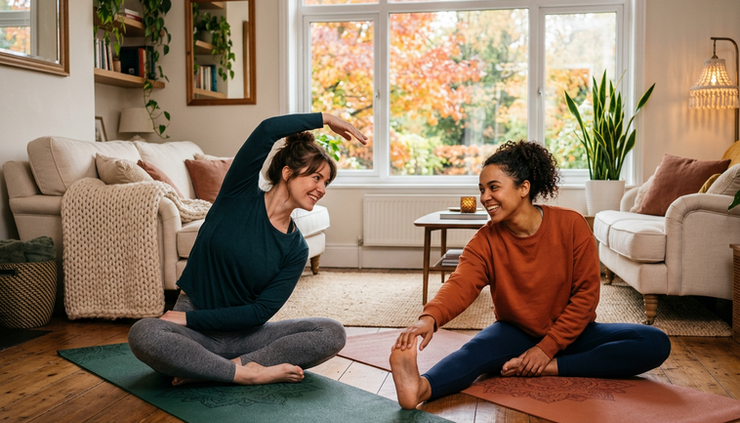
Make movement more fun with someone else
Fitness becomes easier to stick with when it feels enjoyable. One of the simplest ways to make it more enjoyable is to bring someone with you.
Invite a friend, partner, neighbor, or family member to join your walk or workout. You can keep it casual. Meet for a walk instead of coffee. Do a short workout video together. Take turns choosing the walking route. Text each other when you finish a workout.
Accountability does not have to be intense. It can be as simple as, “Want to walk on Tuesday?” or “Did you move today?”
Getting moving with someone else can help in a few ways:
It makes the time pass faster
It gives you a reason to show up
It turns movement into connection
It adds fun to your routine
It helps you stay consistent when motivation drops
This can be especially helpful as the holidays get closer. Schedules fill up, food routines change, travel happens, and stress can rise. Having a fitness habit already in place makes it easier to keep moving through it all.
You do not need to do everything perfectly during the holidays. You just need habits that are steady enough to return to.
Let fall be your reset
Fall brings a new season, and with it, a chance to return to yourself. You can rebuild your routine, upgrade what already works, and create habits that will carry you through the holidays and colder months.
Start small. Put movement on your calendar. Create a simple weekly routine. Count the everyday activities that get you moving. Enjoy the cooler weather. Track the habits that help you feel good. Give your body the sleep it needs. Bring a friend along when you can.
You do not have to wait for a Monday, a new month, or a new year. You can start with one walk, one stretch, one earlier bedtime, or one workout on the calendar.
This season, keep it simple and keep showing up. Your fall routine starts with the next small choice!
If you are looking to spice up your workouts this season or want help building a routine that fits your life, contact me here!
For more Move With Marie updates, sign up for my newsletter!
You can also follow Move With Marie on social media:
Platform | Handle |
TikTok | |
YouTube | |
Comments